30 Jun 2026
Exploring Behavioral Metrics from Digital Poker Platforms to Refine Entry Timing in Tiered Promotional Series Across Global Circuits

Digital poker platforms collect extensive data on player actions including deposit frequencies, session durations, and progression through loyalty structures, and these behavioral metrics provide concrete patterns that operators and players alike examine when planning entries into tiered promotional series on live circuits worldwide. Patterns emerge when platforms track how users respond to limited-time incentives, with data showing clusters of activity around specific qualifiers that feed into larger events.
Key Metrics Tracked on Digital Platforms
Platforms record variables such as average time between deposits, win-rate consistency across different stake levels, and badge completion rates that unlock higher reward tiers, while researchers analyzing aggregated datasets note correlations between these indicators and successful qualification rates for satellite events. Studies from gaming analytics firms indicate that players who maintain steady engagement windows of 45 to 90 minutes per session show higher conversion rates into live-circuit qualifiers compared to those with irregular patterns.
Deposit and Engagement Timing Correlations
Behavioral logs reveal that deposit spikes often precede major promotional windows by 48 to 72 hours, and platforms use this information to adjust satellite structures so that entry timing aligns with observed user activity peaks across regions. Figures from North American operators demonstrate that synchronized deposit campaigns increase participation in tiered series by measurable margins, particularly when those campaigns target users who have already completed initial achievement milestones.
Refining Entry Strategies for Tiered Series
Observers note that players who monitor their own platform-generated statistics adjust entry timing to coincide with promotional rollouts that match their documented activity rhythms, and this approach links digital progression directly to qualification pathways for events such as the World Series of Poker Circuit stops and international high-roller festivals. Data indicates that individuals advancing through bronze-to-silver loyalty thresholds tend to enter mid-tier satellites during the second week of a promotional cycle rather than the opening days.
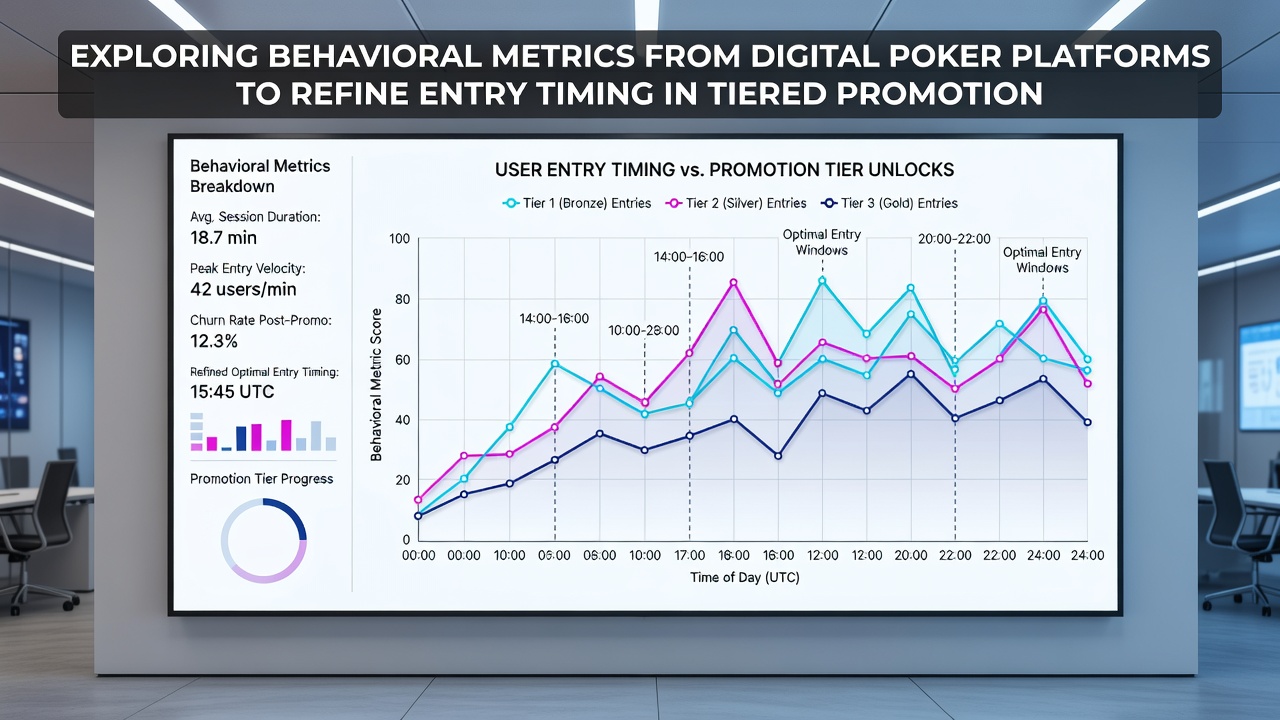
European circuits including stops on the European Poker Tour display similar trends where users who complete weekly mission sets receive targeted notifications that align with documented play-time peaks in their regions. Platforms integrate these notifications with live-event calendars so that digital achievements translate into entry opportunities for summer festival schedules, including those scheduled for June 2026 across multiple continents.
Global Circuit Integration and Regional Variations
Asia-Pacific circuits exhibit distinct behavioral signatures where shorter, high-frequency sessions correlate with stronger performance in late-stage qualifiers, and operators adjust promotional structures accordingly to capture these regional differences. According to reports compiled by the Nevada Gaming Control Board, cross-platform migration patterns show that users who optimize entry timing based on personal metrics achieve qualification rates that exceed baseline averages by consistent percentages.
One documented case involved a cohort tracked across multiple apps whose cumulative play streaks aligned with specific promotional tiers, resulting in sponsored entries to live events in both North America and Europe. Research institutions studying online-to-offline transitions have published findings that link badge systems and leaderboard positions to measurable increases in live-circuit participation when timing is refined using platform data.
Practical Applications Across Circuits
Players who review session heatmaps and deposit calendars within apps identify optimal windows for entering tiered promotions that feed into events such as the Triton series or WSOP-branded festivals, and these reviews incorporate data points gathered over multiple months of platform activity. Government agencies in Australia have released aggregated statistics showing that digital engagement metrics influence qualification pathways for international circuits when users time their entries to match both personal patterns and series schedules.
Additional linkages appear when achievement systems unlock direct buy-in discounts or satellite seats, allowing participants to move from casual app usage to structured live-event pathways without abrupt transitions. Platforms continue to refine these systems by incorporating real-time feedback from completed series, which in turn updates the behavioral models used for future promotional planning.
Conclusion
Behavioral metrics gathered from digital poker platforms supply verifiable data points that inform entry timing decisions for tiered promotional series spanning global circuits, and continued analysis of these metrics supports more precise connections between online activity and live-event qualification routes. Regional regulatory reports and platform analytics together demonstrate measurable outcomes when timing aligns with documented user patterns across multiple markets.